 English
 Nederlands
by Patrick van Schie
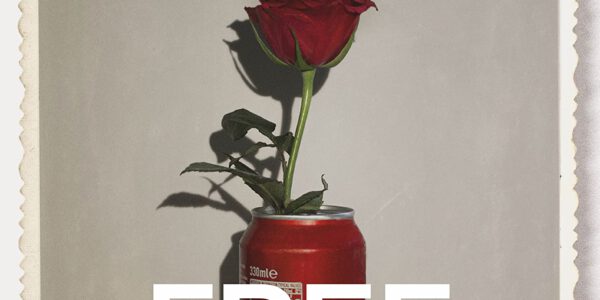
This year saw the publication of the second book by Lea Ypi, the Albanian author who previously wrote Free, a work about life in Albania as seen through her childhood eyes. Her new book, Indignity: A Life Reimagined, is a novelized account of her search into the life of her paternal grandmother, Leman Ypi (born as Leskoviku). Lea’s investigation takes her back to the period before the First World War, to the decline of the Ottoman Empire and the birth of the Albanian state.
Her grandmother was a Greek woman from Salonika (Thessaloniki) who moved to Albania during the Second World War and there met Lea’s grandfather. Grandfather Asllan was, politically speaking, a social democrat and had known the future Albanian “Stalin,” Enver Hoxha, since their high school days. This, however, did not help him at all when the communists came to power in 1945.
In May 1947, Asllan was arrested, tortured, and forced to sign a confession containing the following passages:
“On several occasions I have expressed myself as follows: The people’s democratic [i.e., communist; PvS] government of Albania is a dictatorial government. They kill, imprison, and pass arbitrary judicial sentences. The measures taken by the State Security Service are cruel and extreme. I said that there is no freedom of expression in Albania. Only communist elements are allowed to write freely, while others are censored. I said that the leaders and principal administrators of the state hold high positions not because of their experience or competence, but because they enjoy the trust of the Communist Party as its members. For the same reason there is great confusion about the system by which judges are appointed: such judges have no legal expertise and are unable to interpret the law, so they constantly issue decisions that undermine it. I said that the tax laws amount to confiscation. People are not taxed based on their profits but on their total assets.”
A rather accurate description of communism in practice – perhaps even a bit too mild, since in such a system no one (outside the absolute party elite) is allowed to write freely, and no one is truly trusted, not even party members. Communism is built on extreme distrust; hence everyone’s life is constantly under surveillance. But Asllan’s characterization of certain features of communism was, in the regime’s eyes, a treasonous crime.
On November 26, 1947, Asllan was convicted of conspiracy with representatives of the Albanian Social Democratic Party and sentenced, in the words of the “court,” “to 20 years of imprisonment with hard labor, loss of all civil and political rights, and confiscation of his property, both financial and material.”
Asllan’s wife, Lea’s grandmother Leman, was shortly afterward sentenced to hard labor in the fields. Shortly before the communists seized power in Albania in 1945, Leman had the opportunity to flee the country with her husband and their young son (Lea’s father). A National Socialist German she had known for some time (but did not like), who predicted what the communists would do once in power, offered to take her family to Italy. But Leman thought, “What do I have to fear?” Her decision not to accept the German’s offer would cost the Ypi family dearly.
Indignity: A Life Reimagined is largely not about Albania under communism. Rather, the author traces the lives of her grandparents in the preceding decades;lives that, through fate or coincidence, would ultimately lead to a tragic ordeal under Hoxha’s communist regime.
Image: https://www.bol.com/nl/nl/f/indignity/9300000199567474/


Follow Us!