 English
 Nederlands

Beata Bruggeman-Sekowska
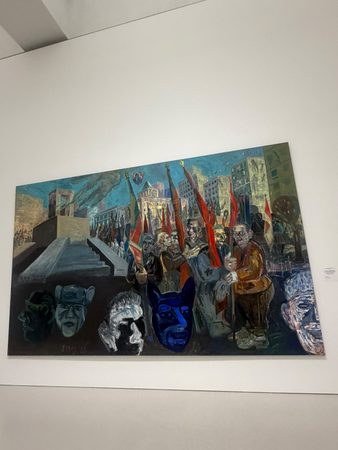
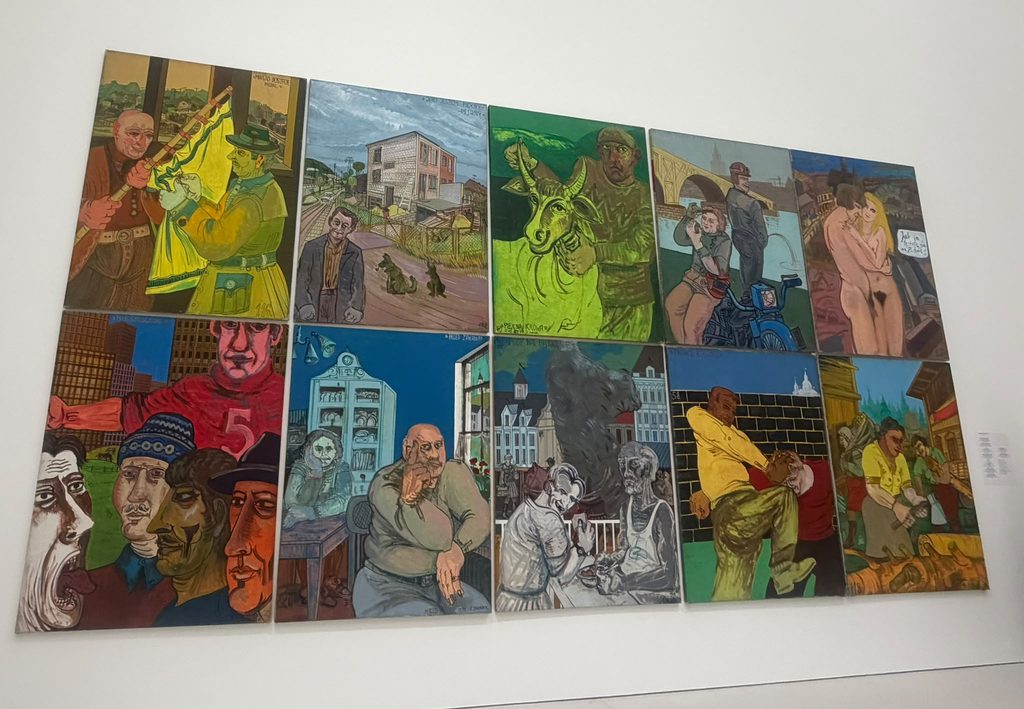
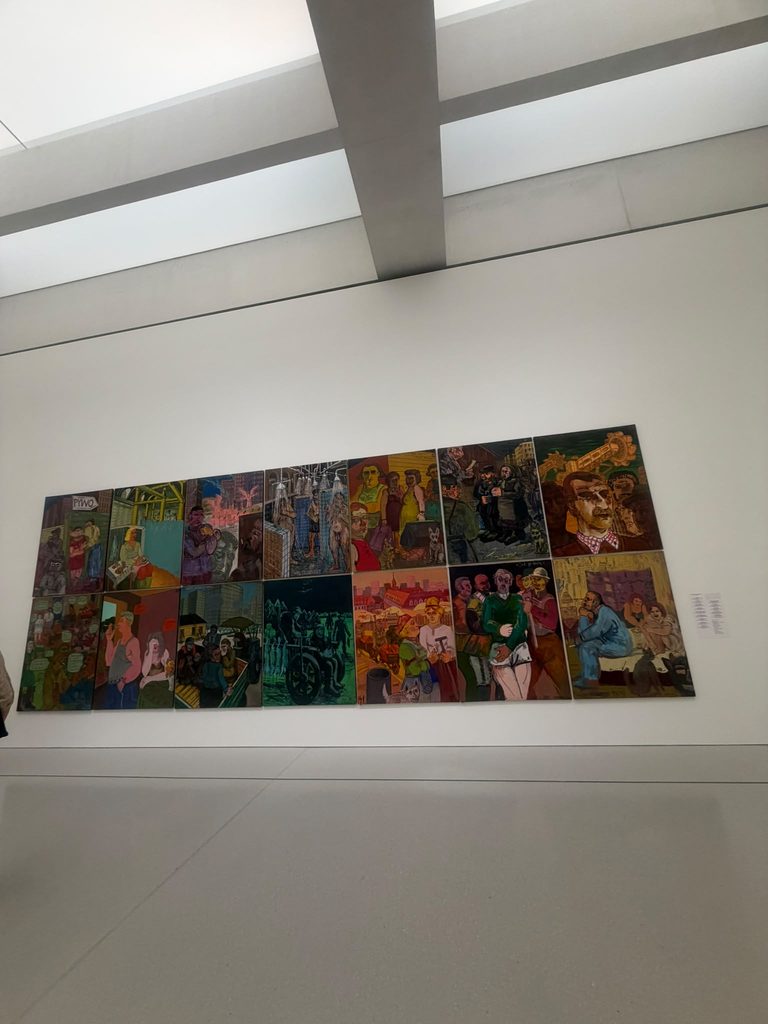
A spectacular exhibition can be admired at the Museum of Modern Art in the capital of Poland, Warsaw entitled: Edward Dwurnik: Pride and Shame. It presents parts of the rich repertoire of Dwurnik series, concentrating on his works from the 1970s and ’80s, two major series of his: Sportspeople and Workers.
©Beata Bruggeman-Sekowska
©Beata Bruggeman-Sekowska
Edward Dwurnik (1943-2018) was a politically engaged contemporary Polish artist believing that art should reflect real life and be accessible to everyone. His paintings presented ordinary people, their challenges and the social changes that shaped Poland under communism. Dwurnik created more than 3,5 thousand paintings and 10 thousands drawings. In 1965, Dwurnik visited an exhibition of the celebrated self-taught artist Nikifor Krynicki and adopted a similar style, a sort of grotesque along with distinctive anti-aesthethic stance which he later developed.
His Hitchhiking Journeys (Podróże autostopem ) series, begun in 1966, consists of urban landscapes mostly without a horizon line. They are viewed from a bird’s-eye perspective and usually depict specific Polish cities. In these paintings, buildings and other structures that are actually many blocks apart may appear side by side. Dwurnik’s cities are populated by people and an entire array of artefacts. One of the recurring motifs is the “idols” – monumental head-shaped statues symbolising totalitarian power, the concept for which took shape in the summer of 1970.
In 1972, he began working at his Sportsmen (Sportowcy) series. According to the artist, the figures in the Sportsmen series are either smokers of Sport cigarettes, a popular brand at the time, or simply masters of the art of pushing and shoving their way through life. Dwurnik created a catalogue of human types from the Polish People’s Republic (PRL), including engineers, individual farmers and drunks. The series caricatured citizens of the Polish People’s Republic and is often considered one of the most valuable works documenting everyday life in communist Poland. During almost twenty years of working on this series, Edward Dwurnik created 274 canvases.
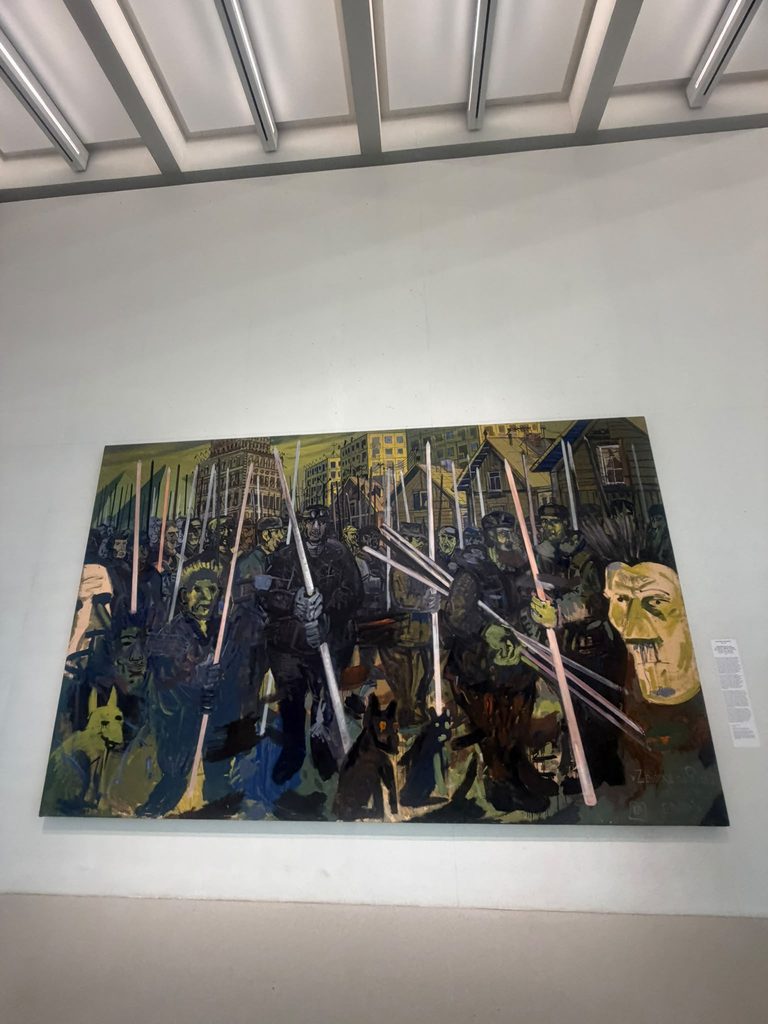
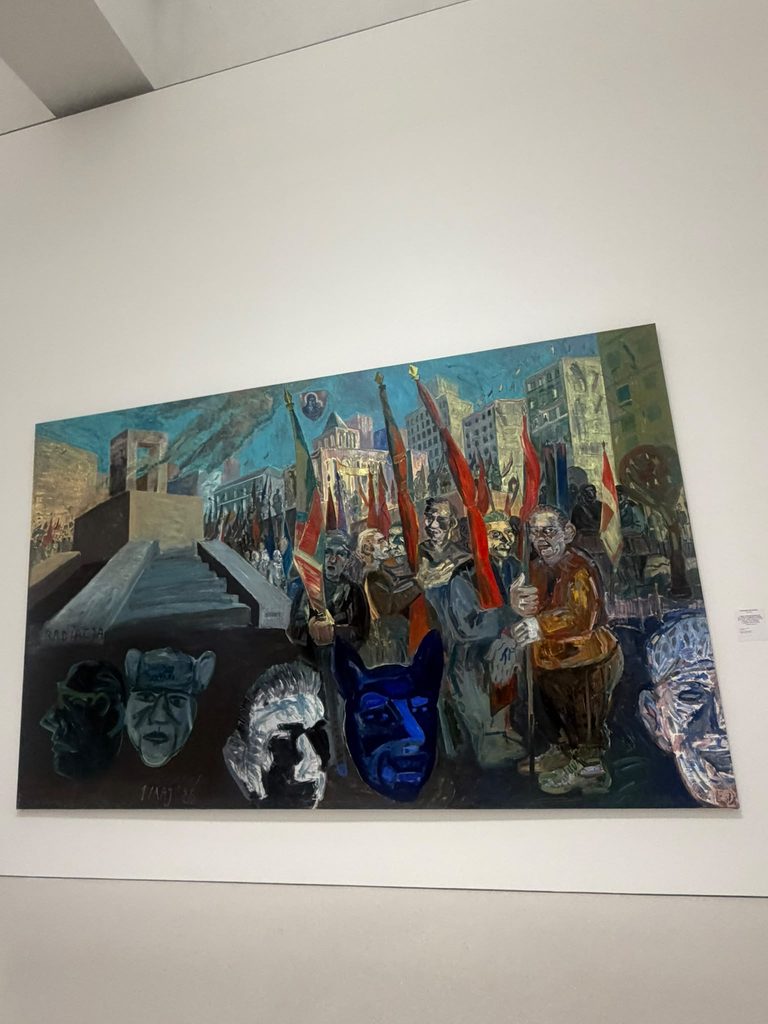
His Workers (Robotnicy) series, created between 1975 and 1991 targeted dramatic political events of the 1980s: workers’ strikes, the birth of the Solidarity movement, martial law and resistance to communist rule and the first free election and the change of the political system. This series comprises canvases painted with dynamic brushstrokes and dark tones prevail in them. This series consisted of 260 paintings, a few hundred drawings, collages and graphics.
©Beata Bruggeman-Sekowska
©Beata Bruggeman-Sekowska
In 1981, his Warsaw series were really prophetic as they showed martial law, which was declared later on this year on December 13. His painting presented tanks on the empty streets, crows on the snow, barbed wires.
In the early 1990s he devoted his series The Way to the East; 1989–1991 (Droga na wschód) to the victims of Stalin’s regime. His another series From December to June; 1990–1993, (Od grudnia do czerwca) was devoted to ninety-six people murdered during the martial law. Their names were mentioned in a special report prepared by a committee appointed by Contract Sejm to investigate the activities of the Ministry of Internal Affairs. Between 1991 and 1994. in his series Long Live the War! (Niech żyje wojna! ) Dwurnik criticized and commented on the tragic events in the former Yugoslavia.
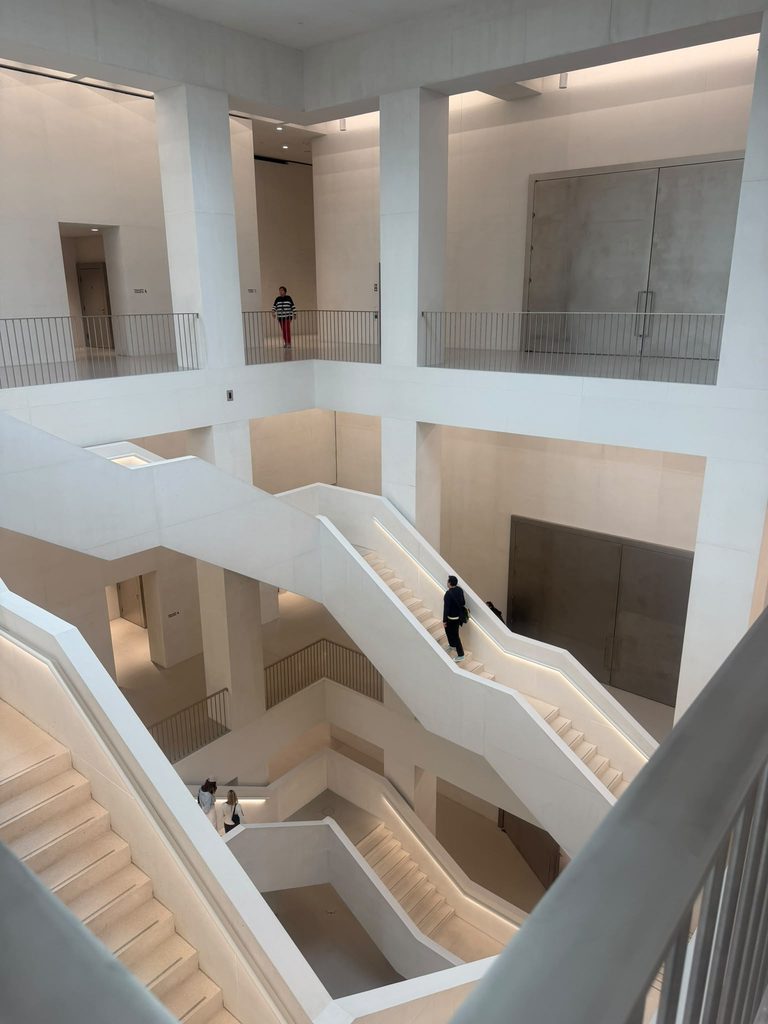
Museum of Modern Art in Warsaw, Poland ©Beata Bruggeman-Sekowska
But why is the exposition called Pride and Shame? It carefully explores the social and emotional consequences of Poland’s transformation, such as social mobility and changing class identities. Pride in progress and achievement often coexisted with shame about one’s origins or social position. Dwurnik captured these conflicting emotions with honesty and irony, offering a powerful portrait of Polish society whose legacy remains visible today.
The exposition is open till 28 February, 2027.
Sources:
Wikipedia
Musuem of Modern Art in Warsaw: https://artmuseum.pl/en/exhibitions/edward-dwurnik-pride-and-shame
https://culture.pl/pl/tworca/edward-dwurnik
Photos: ©Beata Bruggeman-Sekowska


Follow Us!